Identify a Handbag by Image


Download for iPhone: identify a handbag with Invy for iPhone
Start with the bag’s silhouette, then use logos, hardware, construction, and labels to narrow a photograph to the likely brand, line, size, and season.
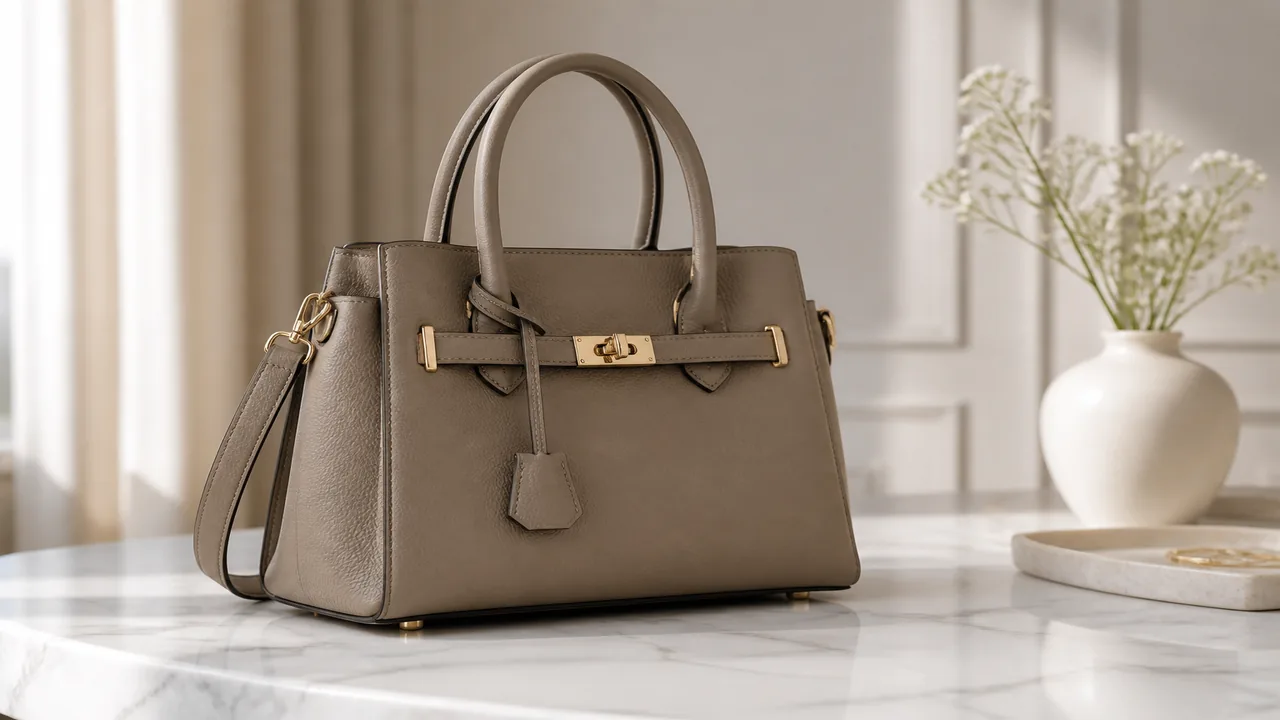
To identify a handbag by image, upload a sharp picture that shows the complete bag and search for visually matching listings. Separate the broad shape—tote, satchel, hobo, bucket, shoulder, crossbody, clutch, or top-handle—from model-specific evidence such as a turn-lock, chain weave, quilting pattern, handle anchor, pocket layout, and logo treatment.
Invy combines shop by image with price comparison. That makes the photo useful twice: first to build a credible identification shortlist, and then to compare matching or similar bags across stores. A visual match is evidence, not authentication, so verify every listing before buying.
Start With Handbag Shape and Proportions
Shape is the fastest way to reduce a large result set. Note whether the body is structured or slouchy, the width-to-height ratio, the depth of the base, and where the handles meet the body. A trapezoid tote and a rectangular east-west shoulder bag can share leather and color but belong to entirely different lines.
- Body: rectangular, crescent, dome, bucket, saddle, envelope, or trapezoid.
- Carry system: top handles, chain shoulder strap, adjustable crossbody, wristlet, or convertible straps.
- Closure: zip top, flap, drawstring, frame, magnetic snap, turn-lock, or open tote.
- Scale: compare the bag with a hand, phone, or known object, then confirm dimensions on the seller page.
Brand and Model Clues Hidden in a Bag Photo
Logos are useful, but construction can be more dependable when branding is subtle. Look at stitch spacing, edge paint, quilting alignment, monogram scale, feet, rivets, zipper-pull shape, chain links, and the geometry of signature clasps. Interior photos may reveal a heat stamp, fabric label, creed patch, country mark, or style code.
Seasonal updates create difficult near-matches. A model can keep its name while changing strap width, lining, hardware color, pocket count, or dimensions. Compare those attributes instead of accepting the first listing with a similar silhouette.
Six-Step Handbag Photo Identification Workflow
- Photograph the entire bag in diffuse daylight against a plain background.
- Add close-ups of the logo, closure, zipper pulls, handle mounts, corners, lining, and label.
- Crop away unrelated clothing and furniture without removing the bag’s edges.
- Search the strongest full view, then repeat with one distinctive detail at a time.
- Compare likely matches by official name, size, material, hardware finish, pockets, and style number.
- Compare current retail, resale, shipping, condition, and return terms before choosing an offer.
For an image-first search that continues into shopping, use the identify handbag by image app and keep screenshots of the strongest candidate listings for side-by-side checking.
Exact Match, Similar Bag, or Authentication?
| Goal | Evidence needed | Safe conclusion |
|---|---|---|
| Identify the bag family | Shape, closure, straps, signature details | Likely brand or line |
| Confirm the exact model | Measurements, interior, style code, seasonal details | Model and variant after cross-checking |
| Find a lookalike | Silhouette, material, color, carry style | Visually similar alternative |
| Authenticate | Construction, codes, provenance, expert review | Not established by image search alone |
Compare the Same Bag, Not Just the Same Look
Handbag prices vary with size, material, color, season, condition, accessories, and seller type. A mini bag should not be compared with a medium version, and a pre-owned listing without a strap or dust bag is not equivalent to a complete set. Check taxes, shipping, authentication fees, return windows, and whether the displayed price applies to the photographed variant.
If the exact model is discontinued, use visually similar results deliberately. Preserve the features that matter—capacity, strap drop, closure, structure, and budget—rather than chasing an inaccurate exact-match label.
Take Photos That Separate Similar Handbags
A catalog-style front view is useful, but it rarely contains every discriminator. Place the empty bag upright in diffuse daylight and photograph it straight on, from both sides, from the base, and from a three-quarter angle. Add a ruler or tape measure beside—not across—the bag to document width, height, depth, handle drop, and strap length. Stuff a soft bag lightly with clean tissue so its intended silhouette is visible without stretching it.
Turn the lining outward only when that can be done without stress. Capture the interior organization, label, heat stamp, zipper brand, pocket shape, and any style or date code. For reflective hardware, move the light rather than applying a filter. A sharp close-up of a distinctive clasp or handle anchor often produces a better model shortlist than a distant photo of the entire bag. Keep serial numbers private when sharing images publicly.
Which Handbag Clues to Use—and Which to Skip
| Clue | Use it when | Skip or downgrade it when |
|---|---|---|
| Logo or wordmark | Letterforms and placement are clear | It is blurred, detached, or easily added |
| Hardware geometry | Clasp, chain, feet, and pulls are original | Parts appear replaced or generic |
| Print or quilting | Scale and alignment are visible | Perspective or folds distort the repeat |
| Seller title | It includes a checkable style number | It only says “designer style” or “inspired” |
| Color name | An official archive documents it | Lighting or editing changes the shade |
Use several independent clues together. A stamped logo plus matching measurements, pocket layout, hardware, and official style code is much stronger than any one feature. Skip monogram guesses based on tiny screenshots and avoid assigning a luxury brand from color alone.
Verify a Candidate Against Reliable References
Once image search supplies a likely name, look for an official product page, archived lookbook, authorized retailer description, repair guide, or reputable resale listing with detailed photographs. Build a short checklist containing dimensions, material, lining, closure, pocket count, strap configuration, hardware finish, feet, and style number. The candidate should explain all visible details, not merely share the same outline.
Watch for family names reused across sizes and seasons. “Small,” “mini,” and “medium” are not standardized, and outlet versions can differ from main-line releases. Compare centimeters as well as marketing labels. If the bag has been customized, repaired, or assembled with a replacement strap, identify the body separately from the accessory. Record unresolved differences in your notes rather than forcing an exact model conclusion.
Limits of Handbag Identification by Image
A photo can support
- Bag type, silhouette, and carry style
- Likely brand family and model candidates
- Visible materials, hardware, and condition
- Comparable current shopping offers
A photo cannot establish
- Authenticity or lawful provenance
- Hidden repairs and interior condition
- Exact material without documentation
- A guaranteed resale or future value
Use image results as a structured lead. For a costly designer purchase, require original seller photos, return protection, complete disclosures, and authentication appropriate to the brand and value. Invy helps shop by image and compare prices; it does not replace expert authentication.
Unbranded and artisan bags may never resolve to a commercial model. In that case, record the evidence that is still useful: silhouette, approximate dimensions, leather or textile appearance, closure, pocket arrangement, strap drop, hardware tone, and construction style. Those attributes can find a functional or visual alternative without inventing a brand. For inherited bags, preserve receipts, dust bags, tags, and repair paperwork because provenance can be more informative than another front-view image.
FAQ
Can I identify a handbag from one photo?
Often, yes. A clear front or three-quarter photo can reveal the brand and bag family, but an exact model usually requires views of the hardware, interior label, base, and serial or style tag.
What handbag details should I photograph?
Capture the full silhouette, logo or stamp, clasp, zipper pulls, handle attachments, corners, lining, interior label, and any serial or style code. Photograph both sides if the design is asymmetric.
Can image search identify a bag with no visible logo?
It can still suggest a shape, style family, or visually similar bags by using proportions, seams, pockets, hardware, and materials. Without a logo or code, treat the result as a shortlist rather than a confirmed model.
Does a matching photo prove a designer handbag is authentic?
No. Image matching identifies appearance, not authenticity. Authentication may require construction details, date or serial codes, provenance, seller history, and review by a qualified authenticator.
How do I find the exact handbag model name?
Compare visual results with official product archives, retailer pages, measurements, hardware finishes, interior layouts, and style numbers. Model names can remain similar while sizes and seasonal versions change.
Can Invy compare handbag prices from a photo?
Invy is designed to shop by image and compare prices across stores. Confirm that listings show the same model, size, material, color, condition, and included accessories before comparing totals.