
How Much Is It Worth From a Photo?
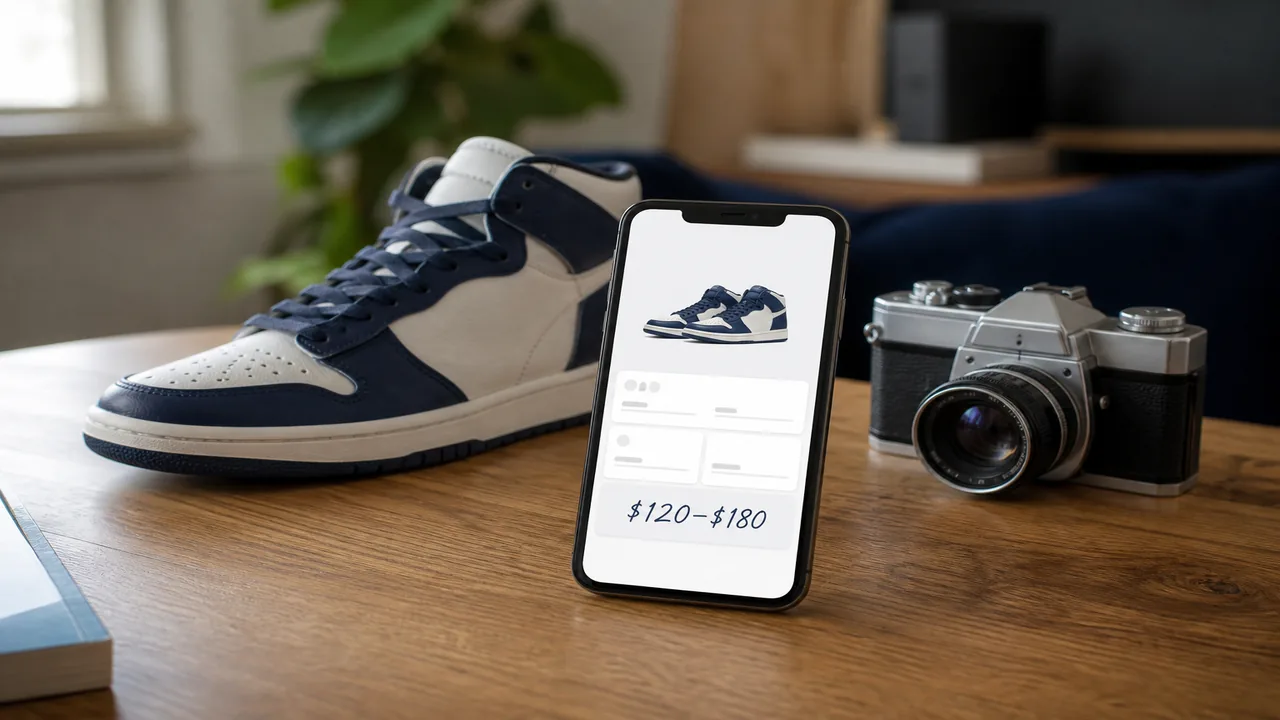


Download for iPhone: AI shopping assistant app
To estimate how much an item is worth from a photo, identify the exact product or closest model, document its condition, find recent completed sales, and adjust the range for completeness, demand, location, and selling costs. The result is a current resale estimate—not a guaranteed sale price or professional appraisal.
> Value comes from evidence of what comparable items actually sold for, not simply the highest price currently advertised.
- Use photos to establish identity, version, condition, and included accessories.
- Prefer recent sold or completed listings over optimistic asking prices.
- Give a realistic range and state what evidence or uncertainty moved it.
How much is it worth today
An item is worth roughly what an informed buyer is likely to pay in the current market. That figure can be very different from the original receipt, replacement cost, or a seller’s favorite listing. Start by using the image to identify the brand, model, edition, material, approximate age, and distinguishing details. Then search for transactions involving the same item.
Invy can help move from a product photo to likely identities and listings. how much is it worth app to establish searchable product terms, then use resale marketplaces, auction archives, and specialist databases to research completed sales.
Write the estimate as a range, such as “likely resale value: $70–$95 before fees,” rather than a precise $83.42. A range reflects normal variation between platforms, locations, buyers, and condition.
A seven-step photo-to-value workflow
- Take a full, well-lit photo and close-ups of labels, model numbers, signatures, damage, and accessories.
- Identify the product as narrowly as possible, including version, size, color, year, and regional variant.
- Search recent completed or sold listings for the exact item before widening to close comparables.
- Remove misleading comparisons: bundles, broken units, sealed collector examples, unrelated sizes, and suspicious sales.
- Group the remaining sales by condition and completeness.
- Use the middle of the comparable range, then adjust for meaningful differences.
- Subtract likely platform fees, shipping, cleaning, repair, or authentication costs if estimating net proceeds.
A useful estimate records the date and sources. Resale markets move. Yesterday’s viral collectible can cool quickly, while seasonal gear may strengthen near the relevant season.
Which price evidence should you trust?
| Evidence | What it tells you | How to use it |
|---|---|---|
| Recent sold listing | A buyer completed a purchase | Strongest everyday comparable when identity and condition match |
| Auction result | Market-clearing price on a particular day | Useful for scarce items; check buyer premium and lot contents |
| Active asking price | Seller expectation, not buyer agreement | Use only to understand current supply and upper expectations |
| Trade-in quote | Fast wholesale-style offer | Useful as a lower, convenience-oriented benchmark |
| Original retail price | Historic new-item price | Context only; it does not establish today’s resale value |
| Professional appraisal | Purpose-specific expert opinion | Use for insurance, estate, tax, legal, or unusually valuable items |
Condition and completeness change the number
“Used” is too broad. A mint camera with its charger, box, manuals, and low shutter count should not be compared with an untested body missing its battery. For apparel, disclose stains, alterations, pilling, odors, and measurements. For electronics, record whether the device powers on, battery health, storage, locks, and included cables. For collectibles, photograph edges, seals, certificates, edition numbers, and restoration.
Do not hide defects to make the photo search look cleaner. Damage is part of valuation evidence. Match each comparable to the closest condition tier and explain any adjustment instead of applying a universal percentage.
Estimate, not appraisal
This page describes informal resale research. It does not produce a certified appraisal, authenticate an item, verify provenance, or determine fair market value for tax and legal purposes. Photos can be deceptive, model identification can be wrong, and online sales data can omit returns or canceled transactions.
Seek a qualified appraiser or category specialist for fine art, jewelry, antiques, signed memorabilia, rare coins, luxury goods, estates, insurance schedules, charitable donations, or any item where a mistake would be costly. Authentication may be a separate service from valuation.
Resale value is not retail price comparison
A retail comparison asks which store currently sells a new product for less. A resale estimate asks what this particular used item may bring in its present condition. The first compares offers; the second analyzes market evidence. If your goal is a new-item checkout decision, use compare prices from photo. If your goal is net resale proceeds, include selling fees, payment processing, shipping materials, insurance, and expected negotiation.
Use conservative language when evidence is thin: “Two similar items sold between $120 and $150, but neither matched this edition.” That is more useful than pretending the image proves an exact value.
Understanding Results
A stronger estimate has
- An exact model or edition
- Several recent completed sales
- Comparable condition and accessories
- Documented fees and date
Get expert help when
- Authenticity or provenance is uncertain
- The item is rare or unusually valuable
- The value is for legal, tax, estate, or insurance use
- Photos cannot show hidden condition
Choose comparable sales and normalize the prices
Start with a narrow comparison set: the same model, version, size, material, region, and approximate condition. Read each sold listing instead of relying on its title or thumbnail. A price may represent a bundle, an accepted offer, a nonworking item, or an unusually complete example. Note whether shipping was included and whether an auction result includes a buyer’s premium. Convert currencies using the rate near the sale date when the market is international.
Create a simple worksheet with sale date, platform, exact identity, condition, contents, sale price, shipping, and any major difference from your item. Remove clear mismatches, then sort the adjusted totals. With five or more credible sales, the middle values usually provide a more stable starting point than the single highest or lowest result. If only one or two exact sales exist, widen carefully to an adjacent version and label those examples as weaker proxies.
Do not average together fundamentally different tiers. Sealed and used goods, authenticated and unauthenticated collectibles, tested and untested electronics, or complete and incomplete sets belong in separate groups. The purpose is not to manufacture a large sample; it is to preserve comparability so the final range explains what buyers have paid for genuinely similar items.
Turn market value into likely net proceeds
A resale value range is normally the expected gross selling price. The amount you keep can be lower after marketplace commission, payment processing, promoted-listing charges, packing materials, postage, insurance, cleaning, testing, authentication, and returns. Estimate those costs for the platform and selling method you would actually use rather than applying one universal deduction.
| Sale route | Typical trade-off | Include in your estimate |
|---|---|---|
| Local pickup | Lower reach, fewer shipping costs | Negotiation, travel, payment safety |
| General marketplace | Broad demand, platform costs | Fees, postage, returns, packing |
| Specialist auction | Qualified audience, slower process | Commission, premium structure, consignment terms |
| Dealer or trade-in | Fast and convenient, lower offer | Wholesale margin and payment timing |
Report both figures when useful: “expected selling range $140–$175; estimated proceeds $105–$140 after likely costs.” Recalculate if the item remains unsold, because stale listings are evidence that the asking price may be above current demand. Keep the date with every estimate and revisit seasonal items close to the period when buyers normally search for them.
FAQ
Can a photo tell me how much an item is worth?
A photo can support a resale-value estimate by helping identify the item, model, age, and condition. It cannot establish a guaranteed sale price or replace a qualified appraisal.
Is an Invy result a professional appraisal?
No. Invy helps identify products and locate comparable listings. Any value range you calculate is an informal market estimate, not an appraisal for insurance, tax, estate, lending, or legal purposes.
Should I use asking prices or sold prices?
Use recent sold prices whenever possible. Asking prices show what sellers hope to receive, while completed sales are stronger evidence of what buyers actually paid.
How does condition affect resale value?
Condition can change value substantially. Photograph wear, stains, repairs, missing pieces, packaging, serial labels, and accessories, then compare with sold items in similar condition.
Why is resale value different from retail price?
Retail price is what a store charges for a new product. Resale value reflects current secondhand demand, supply, condition, completeness, location, platform fees, and buyer confidence.
Can I value vintage or rare items from one image?
One image is rarely enough for rare, vintage, signed, or high-value items. Use multiple angles and identifying marks, research provenance, and consult a relevant specialist when the stakes are high.
How recent should comparable sales be?
Prefer sales from the last 30 to 90 days in a stable market. Expand the period only when the item is uncommon, and account for seasonality or major demand changes.