
Identify a Dress by Image: Silhouette, Neckline, Fabric, and Occasion


Download for iPhone: find product from image
To identify a dress by image, read it from large shape to small detail: silhouette, waist placement, length, neckline, sleeve, bodice construction, skirt treatment, pattern, likely fabric, and occasion. Combine the visible terms into one search-ready description.
> A strong result sounds like “emerald satin bias-cut cowl-neck midi slip dress,” not simply “green formal dress.”
- Use a full-length view for silhouette and hem.
- Use detail crops for neckline, sleeves, seams, texture, and print.
- Mark uncertain fabric or occasion terms as likely, not proven.
Start with the dress silhouette
Silhouette is the overall outline. An A-line dress narrows near the upper body and widens toward the hem. A sheath follows the body more closely with a relatively straight skirt. Fit-and-flare combines a fitted bodice with a fuller skirt. Empire dresses place the waist seam under the bust, while drop-waist designs move it toward the hips.
Use identify dress by image app to compare the image with likely dress products, then check whether candidate descriptions use terms supported by the photo. Invy can help continue toward listings and prices, but taxonomy comes before the buying decision.
Dress image identification checklist
| Feature | Common terms | Photo evidence |
|---|---|---|
| Silhouette | A-line, shift, sheath, column, wrap, mermaid, fit-and-flare | Full outer outline |
| Neckline | V-neck, square, scoop, sweetheart, halter, cowl, off-shoulder | Front bodice and shoulder edge |
| Sleeve | Cap, puff, flutter, bell, bishop, short, long, sleeveless | Armhole, volume, cuff, length |
| Waist | Natural, empire, basque, drop, elasticated, no defined waist | Seam, belt, gathering position |
| Length | Mini, above-knee, knee, midi, tea, maxi, floor-length | Hem relative to body |
| Fabric clue | Satin, chiffon, velvet, lace, jersey, tulle, linen, denim | Sheen, texture, drape, weight, transparency |
| Occasion | Casual, work, cocktail, wedding guest, prom, resort, black tie | Formality, construction, decoration |
Create the dress name in seven steps
- Crop the dress while keeping the complete shoulder-to-hem outline.
- Name the dominant silhouette and waist placement.
- Identify the neckline and shoulder treatment.
- Add sleeve shape and length.
- Describe hem length, skirt volume, slit, train, tiers, pleats, or ruffles.
- Add color, pattern, embellishment, and cautious fabric terms.
- Finish with an occasion keyword only when construction supports it.
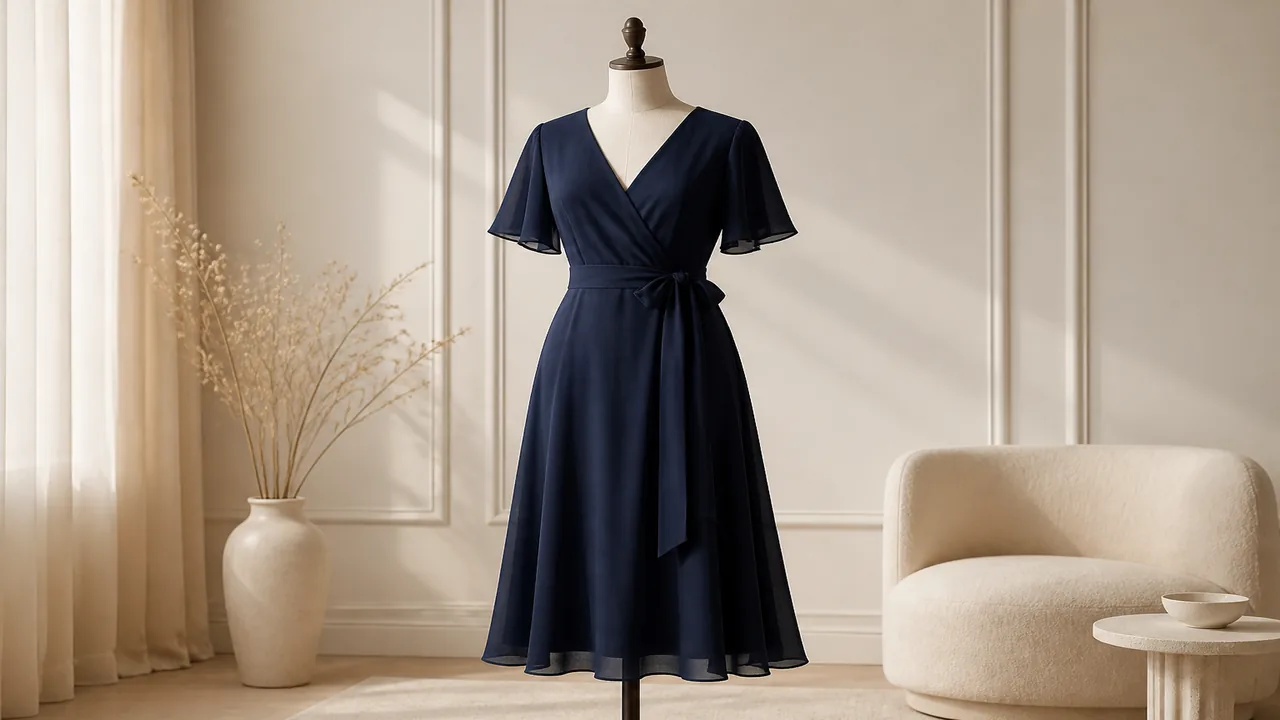
Order keywords naturally: color or pattern, likely material, cut detail, neckline, length, silhouette, and dress. You can then test “blue floral chiffon flutter-sleeve wrap midi dress” and remove one term at a time if results become too narrow.
Read necklines and sleeves from detail crops
A sweetheart neckline forms two rounded curves over the bust and a dip at center. A square neckline uses relatively straight vertical and horizontal edges. A cowl drapes in soft folds; a halter fastens or narrows behind the neck; a boat neckline runs wide and shallow toward the shoulders.
Sleeves need shape as well as length. A puff sleeve gathers for volume near the shoulder or cuff. A bishop sleeve stays full through the arm and gathers at the wrist. Flutter sleeves fall as loose, short flounces. If a jacket or hair hides the armhole, leave the sleeve term out rather than guessing.
Use fabric appearance as a clue, not a guarantee
Fabric changes the way a silhouette behaves. Chiffon tends to look sheer and floaty; satin reflects smooth highlights; velvet has directional depth; jersey drapes and stretches; tulle holds airy volume; linen often creases with a dry texture. Yet photos, filters, lining, and blended fibers can imitate these signals.
Say “satin-look” or “likely chiffon” until a care label or retailer specification confirms composition. This matters for comfort, cleaning, durability, allergies, and price. A visual search can find similar dresses while still being wrong about fiber content.
Classify occasion after construction
Occasion is contextual, not a fixed physical property. A black midi dress could be office wear, cocktail attire, or a casual piece depending on fabric, cut, styling, and dress code. Look at structure, coverage, embellishment, train, volume, and finish before adding terms such as prom, wedding guest, bridal, or black tie.
Do not infer that a white dress is bridal or that sequins automatically mean formal. Use occasion terms to refine an already accurate structural description.
How this fits the broader clothing guide
This dress page is a focused child of identify clothes by image. The broader guide covers jackets, tops, trousers, skirts, knitwear, and shared fashion vocabulary. Use this page when the target is clearly a dress and neckline, bodice, waist, and skirt taxonomy matter.
If your goal changes from naming to buying, continue to shop clothes by photo. Compare product measurements rather than relying on generic size labels. Check fabric composition, lining, closure, opacity, return policy, and whether the retailer image matches the same color and length.
Understanding Results
Strong dress evidence shows
- Full silhouette and hem
- Clear neckline and sleeves
- Waist seams and closures
- Texture and pattern details
Photos may not confirm
- Exact fiber composition
- Back details and lining
- True color under filters
- Fit, sizing, or occasion rules
Photograph the dress from silhouette to label
Begin with a straight front view and back view that show the full shoulder-to-hem outline. Hang the dress on a suitable hanger or lay it flat without pulling the fabric out of shape. Add a side view for trains, bustle, draping, peplums, or high-low hems. Then make detail images of the neckline, shoulder, sleeve, bodice seams, waist, closure, pockets, slit, hem, embellishment, and any lining.
Photograph the brand, style, size, and care labels when present. A style number can establish the exact product, while the care tag can replace an uncertain visual fabric guess with documented fiber content. Use diffuse daylight and avoid filters. Satin, sequins, velvet, and dark fabrics often need angled light to reveal construction without turning highlights white or shadows featureless.
When identifying a dress worn in a screenshot, save both the full outfit and focused crops. The full frame explains proportion and length; close crops expose neckline, print, or trim. Posing, heels, camera height, and body proportions can shift where a hem appears to fall, so do not assign a precise length category from a distorted angle alone.
Verify the final dress description against construction
Test each important term independently before combining it. Search the proposed silhouette and compare waist and skirt shape; search the neckline and compare its edge; search sleeve terminology and inspect gathering and cuff placement. If a term repeatedly produces a different construction, revise it. This method is especially useful for distinctions such as sheath versus shift, trumpet versus mermaid, cowl versus draped neck, and wrap versus fixed surplice bodice.
| Claim | What the image should show | What still needs confirmation |
|---|---|---|
| Wrap dress | Overlapping fronts with a functional tie or fastening | Whether the overlap opens fully |
| Bias-cut dress | Fluid diagonal drape with characteristic seam behavior | Grain direction from construction or listing |
| Silk dress | No visual feature proves the fiber | Care label or reliable product specification |
| Vintage dress | Period-compatible cut, label, closure, and finish | Date, provenance, and alteration history |
Write the final name in layers: a confident structural core, useful visible modifiers, and clearly qualified assumptions. “Black square-neck fitted mini dress with long sleeves; likely stretch jersey” is more accurate than attaching an unsupported brand, decade, or fiber. That distinction keeps the page focused on dress identification while producing terms that can support later research.
FAQ
Can I identify a dress style from a photo?
Yes. A clear full-length photo can often support terms for silhouette, neckline, sleeve, waist, hem length, pattern, likely fabric, and occasion.
What are the main dress silhouettes?
Common silhouettes include A-line, sheath, shift, fit-and-flare, empire, column, mermaid, trumpet, ball gown, wrap, and drop-waist.
Can a photo prove what fabric a dress uses?
No. It can suggest fabric from sheen, texture, weight, drape, and transparency, but confirm exact fiber content and blends from the care label or product description.
How do I identify a dress neckline?
Look at the edge around the neck and shoulders. Useful terms include crew, scoop, V-neck, square, sweetheart, halter, boat, cowl, off-shoulder, and one-shoulder.
Can I identify a dress from a screenshot?
Yes, if the dress outline and details remain visible. Crop text and interface elements, and search close-ups of the neckline, bodice, print, or closures separately.
How do I choose occasion keywords?
Use construction and dress code, not only color. Terms may include casual day dress, cocktail, wedding guest, work, resort, prom, black tie, or bridal.
Can Invy find the dress after I identify it?
Invy can use the image to surface likely products and store options. Verify the silhouette, fabric, measurements, color, size, seller, and return policy.