Identify Clothes by Image: Name the Garment and Its Style


Download for iPhone: product finder app
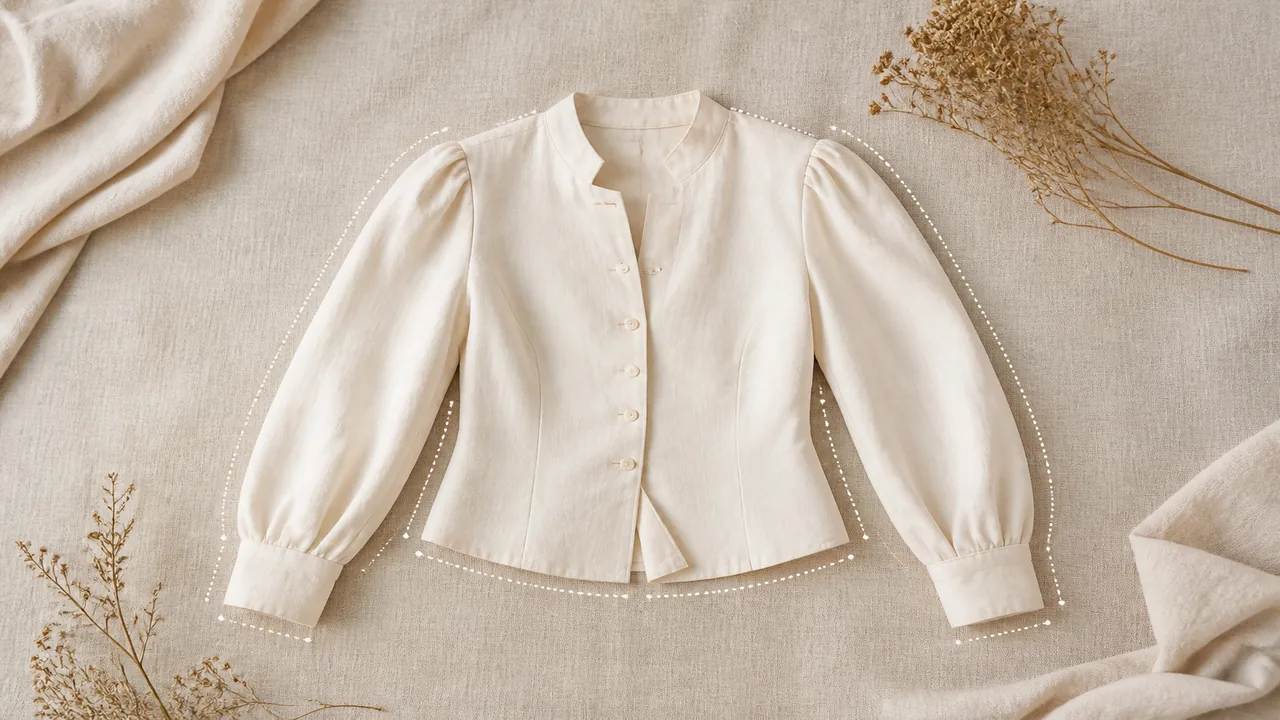
To identify clothes by image, classify the garment type first, then describe its silhouette, cut, neckline or collar, sleeve, length, pattern, likely material, construction details, and style family. The result should be a useful phrase such as “cropped boxy bouclé jacket with a collarless neckline,” not merely “nice jacket.”
> Clothing identification gives you the vocabulary to describe what you see; shopping is the separate step of locating products and comparing offers.
- Crop one garment at a time, especially in layered outfits.
- Separate visible facts from uncertain fabric or brand guesses.
- Combine several specific terms to make a strong text or image search.
Identify clothing in the right order
Begin broad and become specific. Decide whether the image shows outerwear, a top, dress, skirt, trousers, knitwear, activewear, or an accessory. Then inspect shape and construction. A category mistake makes every later keyword less useful: a shirt dress is not a long shirt, and a skort is not simply a short skirt.
Use identify clothes by image app to surface likely fashion matches from the image, then read the candidate product descriptions for terminology you can verify visually. Invy can continue into shopping and price comparison, but the task here is naming what is present.
Build a precise fashion description
| Feature | Terms to consider | Look for |
|---|---|---|
| Garment type | Blazer, shacket, camisole, tunic, midi skirt, cargo trouser | Primary function and construction |
| Fit and cut | Fitted, slim, straight, relaxed, oversized, cropped, boxy | Ease and shape relative to the body |
| Silhouette | A-line, column, flared, cocoon, peplum, wide-leg | Overall outline from shoulder or waist to hem |
| Surface pattern | Gingham, plaid, paisley, floral, houndstooth, striped | Motif, scale, direction, and repeat |
| Likely material | Denim, twill, satin, velvet, lace, rib knit, bouclé | Texture, drape, sheen, thickness |
| Details | Pleated, ruched, smocked, quilted, belted, contrast-stitched | Seams, gathering, closures, and finish |
Use “likely” for material when no care label is visible. Satin describes a weave and appearance, while silk describes a fiber; a glossy garment could be polyester satin. Visual identification should not overclaim.
Six steps to identify a garment from a photo
- Crop the target garment while retaining its full outline.
- Name the broad category and likely subtype.
- Describe fit, cut, silhouette, and length.
- Add collar or neckline, sleeve, waist, hem, closure, and pocket terms.
- Describe pattern, color family, texture, drape, and probable material.
- Test the final phrase against image results and correct terms that return the wrong construction.
A complete phrase might be “women’s navy pinstripe double-breasted oversized blazer with peak lapels.” Each term narrows a different visual dimension. If exact gender or department is uncertain, omit it and rely on construction terms.
Read cut, fit, and silhouette separately
Fit describes how closely a garment sits on a body; cut describes how pattern pieces are shaped; silhouette is the visible outer outline. They overlap but are not interchangeable. An oversized blazer can still have a straight cut, while a fitted top can end in a peplum silhouette.
Perspective can distort these clues. A wide-angle mirror selfie can exaggerate sleeves and hems, while a seated pose hides trouser rise and leg shape. Product-flat images and front-and-back views provide stronger taxonomy evidence.
Identify patterns and likely materials carefully
For patterns, inspect a flat area unobstructed by folds. Distinguish plaid from gingham by line complexity, and leopard from generic animal print by motif. Scale matters: micro-check and buffalo check lead to very different results.
For materials, use visible behavior. Linen often shows irregular slubs and crisp wrinkles; velvet changes tone with pile direction; chiffon appears light and sheer; denim has a diagonal twill structure. These are clues, not laboratory tests. Confirm fiber percentages from the care label whenever comfort, allergies, cleaning, or quality matters.
From clothing name to a buying search
This page is distinct from shop clothes by photo, which starts moving toward retailer matches, prices, sizing, and checkout. It is also distinct from what app identifies clothes from photo, which compares tools. Here, success means leaving with reliable clothing vocabulary.
After identification, search the full phrase, then remove one restrictive term at a time if results are sparse. Compare measurements, fabric content, garment photos, and return terms before purchasing. Two items can share every headline keyword and still differ greatly in drape and construction.
Understanding Results
Best visible evidence
- Full unobstructed outline
- Neckline, sleeve, and closure details
- Flat pattern and texture close-ups
- Care and brand labels
Common uncertainty
- Exact fiber content
- Hidden construction and lining
- Fit distorted by pose or lens
- Brand from generic designs
Build a clothing photo set that separates construction details
Use one full front view and one full back view with the garment hanging naturally or laid flat without stretching. Add side views when volume, vents, or pockets matter. Photograph the collar or neckline, shoulder seam, sleeve head, cuff, closure, pocket opening, waist treatment, and hem. A close-up of the inside seam can distinguish lined construction, overlocking, binding, and tailoring details that are invisible in an outfit photo.
Include the brand label, care label, size tag, RN or style number, and any spare-button packet, but remove the wearer’s name, order information, or other private details. Keep a color reference or neutral white object in one frame when accurate color matters. Daylight near a window is usually more useful than warm room lighting, direct flash, or social-media filters, which can change both color and apparent texture.
For screenshots, make separate crops for each layered garment. Hair, bags, belts, jackets, and poses can hide the boundary between pieces. If only part of the item is visible, describe the confirmed region and avoid inventing the unseen length, back, closure, or sleeve construction.
Test and correct the clothing terms you found
Run the proposed description as an image or text search and inspect whether most results share the same construction. If “raglan sleeve” returns seams that run diagonally from underarm to neckline but the photo has a vertical shoulder seam, replace the term. If “wrap top” results have a functional overlapping closure while the pictured garment only has a sewn crossover front, use “surplice neckline” instead. Search results can act as a visual glossary when used critically.
| Often confused terms | Practical distinction | Best view |
|---|---|---|
| Shirt versus blouse | Shirt usually emphasizes shirt construction; blouse is broader and often softer | Collar, placket, cuffs, fabric |
| Cardigan versus jacket | Cardigan is knitted; jacket is generally structured or woven | Surface knit and internal seams |
| Plaid versus gingham | Plaid can use varied crossing lines; gingham uses regular checks | Flat pattern close-up |
| Pleats versus gathers | Pleats are folded deliberately; gathers compress fabric irregularly | Waist or seam attachment |
Finish with a description containing only terms you can defend. Labels vary between brands and regions, so include a common synonym when it improves discovery. The aim is not to force one fashionable name onto the garment; it is to create a precise, reusable description that leads to structurally relevant results.
FAQ
Can an image identify the type of clothing?
Yes. A clear image can often support labels such as blazer, chore jacket, slip skirt, cargo pants, or wrap dress, though layered and unusual garments may need manual review.
Can a photo identify fabric exactly?
Usually not with certainty. A photo may suggest denim, satin, velvet, linen, leather, or knit, but fiber content and blends should be confirmed from a care label or product description.
How do I identify a clothing pattern?
Crop a clear, flat section and compare motif, scale, direction, and repeat. Useful terms include gingham, houndstooth, paisley, toile, argyle, pinstripe, and ditsy floral.
What photo is best for clothing identification?
Use a well-lit, front-facing image that shows the full garment, plus close-ups of the neckline, closures, seams, texture, label, and care tag.
Is identifying clothes the same as shopping for them?
No. Identification builds accurate fashion vocabulary. Shopping then uses those terms or visual matches to find exact products, alternatives, sizes, and prices.
Can I identify clothes from a social-media screenshot?
Yes, when the garment is visible and not obscured by text, filters, hair, bags, or other layers. Crop one garment at a time.
Can Invy identify clothing and compare prices?
Invy can use a clothing photo to surface likely products and related listings, then help compare store options. Always confirm fabric, sizing, and construction on the retailer page.